
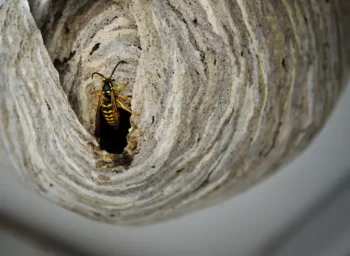
 Bees are pollinators, which makes them one of the most helpful insects for the environment. Even wasps and hornets have their benefits, too. Although these insects are important for pollinating fruits, grains, and vegetables, that doesn’t mean they’re a welcome sight near your property. Beneficial or not, having bees, wasps, and hornets near your home is extremely dangerous – especially if there’s children, pets, or someone who is allergic to them nearby. To protect yourself from unnecessary stress, contact Live Oak Pest Control for professional nest removal.
We’re proud to have over 52 years of experience expertly removing bees nests, wasps nests, hornets nests, and more. Call us today to get a free inspection for your McAlpin property.
Is Professional Nest Removal Necessary, or is DIY Wasp Nest Removal Good Enough?
Cans of wasp and hornet nest spray are commonly found in stores, so you may be wondering how safe and effective they really are. When used properly they can be beneficial, so be sure to read all of the instructions and follow them carefully.
Safety, on the other hand, isn’t easy to guarantee. Attempting to DIY pest control, especially for stinging insects, is extremely dangerous, you need to stay at a distance and take all the important precautions. Wasps, hornets, yellow jackets, and bees can all become territorial or aggressive when they’ve been upset, especially when their nest is being messed with. Even if every individual insect is small, they shouldn’t be underestimated, as their colony populations can cause harm and potentially death.
To save yourself the hassle, reach out to Live Oak Pest Control’s nest removal experts. With our professional equipment and years of expertise, we’ll handle the issue safely and efficiently.
- If you or someone nearby is allergic to any stinging insects, do not disturb or knock their nests down! Wasps are extremely unpredictable and could go in any direction.
- If you’ve seen a nest bigger than the approximate size of your fist, absolutely do not attempt to knock it down or move it. Calling a professional is the best option!
- Do not let any animals eat wasps or bees that have been killed by pesticides, as it can make the animals sick.
- To remove a stinging insect colony, every individual pest must be eliminated. Even if many of them seem dead, the nest is likely still a threat and should be taken seriously.
- Never spray any chemicals inside your home, even if they’re store bought.
What’s the Difference Between a Wasp Nest vs Hornet Nest?
Identifying the type of nest you’re dealing with can be tough, so we’ve created a visual guide for you. In our area, these are the stinging insect nests you’re most likely to see. However, if none of these are similar to what you’ve spotted on your property, reach out to us today for a free evaluation.
Where do Stinging Insects Hide Their Nests?
If you’re hearing buzzing noises or seeing many bees and wasps flying near your property, you could be dealing with a nest. If you’re unable to find it, check these common hiding spots:
- Ground Holes or Rodent Burrows: Common for Yellow Jackets nests and sometimes Bumblebees.
- Thick Grass, Compost Piles, or Overgrown Areas: Potential Bumblebee nests.
- Tree Hollows or Cavities: Honeybees and European Hornets often prefer these areas.
- Branches and Dense Foliage: If you see a large, football-shaped paper nest, it’s likely Bald-Faced Hornets.
- Under Eaves, Porch Ceilings, and Overhangs: Paper Wasps and sometimes Bald-Faced Hornets frequently nest in these areas.
- Inside Light Fixtures, Grills, or Mailboxes: Paper Wasps can build umbrella-shaped nests in these covered spots, or other sheltered hiding places.
- Wall Cavities, Behind Siding, and Attic Voids: Honeybees, Yellow Jackets, and European Hornets love to sneak into the small gaps of buildings.
- Garages, Sheds, and Outbuildings (Corners, Rafters, Storage Areas): Paper Wasps, Mud Daubers, and sometimes Bumblebees can be found inside these structures.
Common Stinging Pests in McAlpin Yards
- Bald-faced hornets are black with many small, white markings. Their nests are particularly large, and appear to be made of a papery material. They can typically be found near trees, shrubs, or buildings, and are very aggressive and sting many times.
- Bumblebees are generally considered a “cuter” bee, with circular fuzzy bodies and yellow and black stripes. Their nests are usually underground and they’re unlikely to be aggressive.
- Honeybees are small, fluffy, and sometimes considered “cute” as well, with golden-yellow and black stripes. They usually nest in hives and generally aren’t aggressive until they’re provoked.
- Carpenter bees are larger than honeybees and their colors may appear similar to bumblebees, but they’re not fuzzy. They create nests in weakened wood, which frequently damages structures, and this damage is often confused for termites.
- Cicada killer wasps are big, and scary-looking, but thankfully they’re often on their own, not aggressive, and generally harmless to people. They have black and yellow markings with amber colored wings and they keep their nests below ground.
- Mud daubers are black wasps with long legs and a small waist. Many people find them intimidating, but they’re generally not aggressive unless provoked.
- Paper wasps are thin and their long bodies also have black and yellow stripes. Their nests are typically small, hidden under building eaves and in trees. Having a paper wasp nest nearby can be dangerous, as they become aggressive quickly when anything gets too close to their nests.
- Velvet ants, despite the name, are actually a species of wasp. They’re easy to spot thanks to their hair and bright red and black markings, but they are solitary wasps and do not build nests or colonies. Do not try to handle one of these pests under any circumstances, as their sting is extremely and notoriously painful.
- Yellowjackets are smaller wasps that have yellow and thin black stripes. These wasps are known for being one of the most aggressive stinging insects, and frequently attack people and animals for little to no reason.
How to Keep Bee and Wasp Nests Away From Your Property
Unfortunately, it can be difficult to control where bees and wasps construct their nests. However, there are some preventative measures you can take to make your yard less appealing. Consider the following strategies to encourage any wasps that fly by in the future to keep looking for a different home.
Effective nest prevention tips to keep your home safe:
- Seal any small gaps or cracks in your home’s exterior.
- Keep all outdoor trash cans sealed with tight lids.
- When eating in your yard, keep any drinks and food covered.
- Try to avoid frequently wearing floral prints or bright colors, which attract stinging insects.
- Keep your yard clean and don’t let clutter build up.
- Frequently trim your lawn and remove any overgrowth.
- Prevent standing water from forming in your yard, which can attract many insects.
What Do I Do if Another Bee or Hornet Nest Forms?
When you’re signed up for one of our pest control service plans, we’ll come back to your property and retreat as much as necessary if a new nest or pest issue comes up. If you’ve had recurring issues with stinging insects, or other pests, around your home, be sure to sign up for a residential prevention plan to keep your property comfortable in the long-term.
Reach Out Today for Expert Bee and Wasp Nest Removal!
Whether you’re dealing with bumblebees or yellowjackets, Live Oak Pest Control is here for you to make sure your pest-related needs are handled, current and future issues are taken care of, and all nearby nests are removed safely. Contact us today for a free inspection.
Back to Bee, Wasp, & Hornet Exterminators – Control – Removal


